Why Is My Water Bill So High? How to Find a Hidden Leak in Your Kennesaw Home

Your Cobb County water bill just landed at two or three times the usual, and nothing changed at the house. It is one of the more common calls we get from Kennesaw homeowners in August. The meter is almost always right. The water really did pass through it, around the clock, from somewhere you have not thought to look. Here is how to find it in an afternoon and how to get part of that bill credited back.
Rule out the easy explanations first
Not every spike is a leak. A Georgia August pushes water use up on its own. Irrigation four days a week, a pool topped off, houseguests, new sod that needs daily watering: any of these adds thousands of gallons without anything being broken.
Cobb County prints a thirteen-month consumption graph on your monthly bill, and it is the fastest diagnostic you have. Look at the shape of the last year. A gradual summer rise that matches previous summers is normal. A single vertical jump with no change in how you use water is the pattern worth chasing.
Takeaway: Compare this month against the same month last year on your bill's own graph before you assume the worst.
Run the meter test, it costs nothing and takes an hour
Cobb County's own leak guidance starts here. Shut off every water fixture inside the house and out, including the ice maker, and make sure nobody flushes anything for the next hour.
Now go read the meter. There is a small triangle or arrow on the face, the leak indicator. With all the water off it should sit perfectly still. If it is creeping or spinning, water is moving somewhere.
Slower leaks hide from that first look. For those, write down the reading, wait a full hour without touching a tap, then read it again. Any change means water left the system while nobody used it. If the meter keeps moving after you close the main shutoff at the house, the leak is in the service line between meter and building, which sits on your side and is yours to repair.
Takeaway: A still leak indicator with everything off clears you in about a minute, and a moving one tells you to keep looking.
The usual suspects, worst first
Toilets come first by a wide margin. A worn flapper lets water seep from the tank into the bowl without a sound, and a badly running toilet can waste about 200 gallons a day. Over a 30-day Cobb billing cycle that is roughly 6,000 extra gallons, which at current water and sewer rates lands somewhere near $80 to $90 from one fixture. Drop food coloring into the tank and leave it alone for ten minutes. Color in the bowl means the flapper is finished, and a toilet repair costs about ten dollars in parts.
Irrigation is next. The EPA figures a sprinkler leak the thickness of a dime wastes roughly 6,300 gallons a month, and it runs at four in the morning when nobody is awake to hear it. After that:
• A faucet dripping once per second wastes more than 3,000 gallons a year.
• A showerhead leaking ten drips per minute wastes more than 500 gallons a year.
• A water heater's relief valve or a weeping tank seam drains straight to a floor drain, out of sight.
• Hose bibs drip behind the wall where nothing shows up indoors.
The EPA puts the average household's leaks at more than 9,300 gallons a year and estimates that fixing the simple ones trims about ten percent off a water bill.
Takeaway: Check every toilet in the house before anything else. One worn flapper explains a lot of sudden spikes.
When the meter moves and you cannot find the water
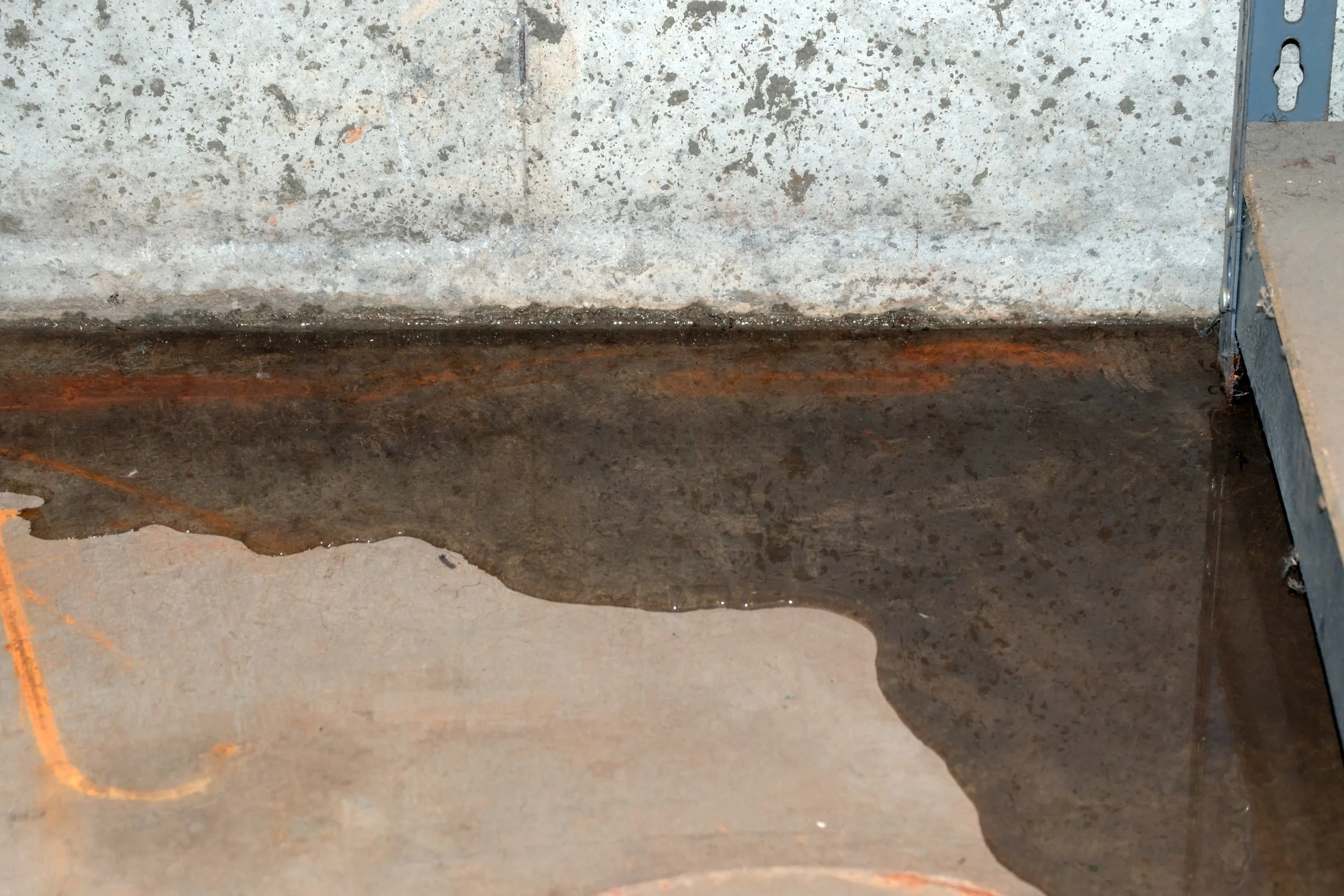
This is where a high bill turns into a real repair. If the indicator is spinning and every fixture in the house is dry, the water is going somewhere you cannot see, usually under the slab or underground between the meter and the house.
A warm spot on the floor, running water you can hear in a quiet house, or a patch of yard that stays green and soggy through a dry week all point that direction. Our post on slab leaks in Kennesaw homes covers the signs and the repair options in detail.
Do not start digging. Locating a buried leak takes acoustic equipment and pressure testing, and guessing wrong means tearing up concrete for nothing. A licensed plumber can pinpoint it first, and in older Kennesaw neighborhoods where a corroded line is the cause, trenchless repair often fixes it without trenching the yard.
Takeaway: A spinning meter with no visible water is losing gallons every hour until somebody locates it.
Will Cobb County credit a Kennesaw homeowner's leak?
Yes, within limits. Cobb County Water System gives customers a partial credit for eligible leaks once in a rolling twelve-month period, covering no more than two affected months. You apply through the customer self-service portal.
You will need proof of the repair: a plumbing invoice, a receipt for parts, or at minimum a written explanation of what was fixed. Hold onto the paperwork from whoever does the work, because the application asks for it.
The credit is a partial offset rather than a refund, so it softens the bill instead of erasing it. And not everything qualifies: pool filling and a faucet left dripping through a cold snap are both excluded.
Takeaway: Fix it first, keep the receipt, then apply. Without documentation of the repair, the credit does not happen.
Frequently Asked Questions
Why is my water bill so high all of a sudden?
A sudden spike comes down to one of two things: a real change in how much water you used, or a leak running nonstop. Check the thirteen-month consumption graph on your Cobb County bill first. If your habits did not change and the graph jumped straight up, run the meter test.
How do I know if I have a hidden water leak?
Turn off every fixture in the house, including the ice maker, and watch the leak indicator on your water meter, the small triangle or arrow on the face. If it moves with all the water off, you have a leak. For slower leaks, take a reading, wait an hour without using any water, and read it again.
How much does a running toilet add to my water bill?
A badly running toilet can waste about 200 gallons a day, or roughly 6,000 gallons over a Cobb billing cycle. At current water and sewer rates that is somewhere near $80 to $90 from a single toilet. Drop food coloring into the tank and wait ten minutes. If color reaches the bowl, replace the flapper.
Will Cobb County adjust my bill after a leak?
Cobb County Water System offers a partial credit for eligible leaks, limited to once in a rolling twelve-month period and no more than two affected months. You apply through the customer self-service portal and have to show what was repaired, whether that is a plumbing invoice, a parts receipt, or a written explanation.
Can a water leak happen underground without me seeing it?
Yes, and those are the expensive ones. A leak in the service line between the meter and the house, or in a pipe under the slab, can run for months with nothing visible indoors. Watch for a soggy or unusually green patch of yard, a warm spot on the floor, or a drop in water pressure.
Ready to Get It Fixed?
If the meter is moving and you cannot find the source, stop guessing before another month of water runs through it. Paramount Plumbing tracks down hidden leaks and handles plumbing repairs for homeowners across Kennesaw, Acworth, Marietta, and metro Atlanta, with 24/7 emergency service for the nights a line lets go at the worst possible time. Call (404) 400-4444 or schedule online and get the next bill back to normal.