Whole-Home Water Filtration in Kennesaw: What It Does, What It Costs, and Whether You Need It
Most Kennesaw homeowners drinking tap water have no idea what is actually in it. That is not a criticism — municipal water in Cobb County meets EPA standards, and the annual water quality report confirms it. But meeting regulatory minimums and delivering water that is genuinely clean, great-tasting, and easy on your plumbing are not the same thing. Whole-home water filtration sits at the intersection of health, plumbing protection, and convenience. This guide breaks down what the technology actually does, what the realistic costs are, and who genuinely needs it versus who is being oversold.
What is in Kennesaw tap water
Cobb County and Cherokee County water utilities publish annual Consumer Confidence Reports that list detected contaminants and their levels relative to EPA limits. Common findings in North Georgia municipal water include:
Chlorine and chloramines: Used to disinfect water during treatment. Safe at regulated levels but affect taste, smell, and can irritate sensitive skin.
Disinfection byproducts: Form when chlorine reacts with organic matter in the water. Regulated but present.
Hardness minerals: Calcium and magnesium are naturally high in North Georgia groundwater. Not a health concern, but they cause scale buildup on appliances, fixtures, and inside pipes.
Trace sediment: Small particles from aging distribution infrastructure, especially in older neighborhoods.
Well water, which some rural properties in the Kennesaw area rely on, has an entirely different profile — often higher in iron, manganese, and bacteria — and almost always benefits more significantly from filtration.
What whole-home filtration actually does
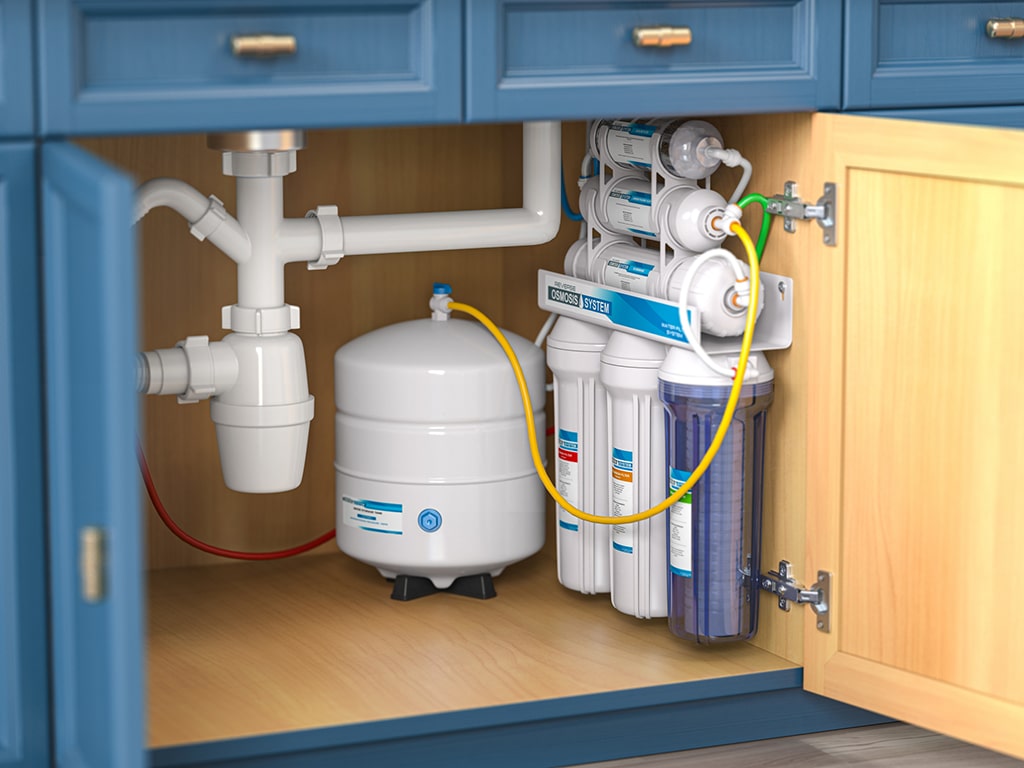
A point-of-entry (POE) filtration system installs where the main water line enters your home, treating all water before it reaches any fixture. Depending on the system, it may include:
Sediment pre-filter: Removes particles, sand, and debris. Protects downstream components.
Activated carbon filter: Removes chlorine, chloramines, and many volatile organic compounds (VOCs). This is what improves taste and eliminates the chemical smell some Kennesaw residents notice from city water.
Water softener: Removes hardness minerals through a process called ion exchange, replacing calcium and magnesium with sodium. This is the most significant thing you can do to extend the life of your water heater, dishwasher, washing machine, and plumbing fixtures.
UV purification: Uses ultraviolet light to neutralize bacteria, viruses, and other biological contaminants. Primarily relevant for well water.
Many systems combine two or three of these stages. The combination you need depends on what is actually in your water — which is why Paramount Plumbing recommends a water test before recommending a specific system.
Who genuinely benefits
Homeowners with well water: Well water in Georgia frequently contains iron, hydrogen sulfide (the rotten egg smell), and bacteria. A POE system with appropriate treatment stages is not optional here — it is necessary for safe, usable water.
Households noticing scale buildup: If you see white crusty deposits around your faucets, on your showerhead, or inside your kettle, your water is hard. That same mineral buildup is happening inside your water heater and supply pipes. A water softener typically pays for itself in appliance longevity within a few years.
Households sensitive to chlorine: Some people notice skin irritation, dry hair, or a strong chemical smell in their water. A whole-home carbon filter removes chlorine from shower water as well as drinking water — something a refrigerator filter cannot do.
Homeowners with older plumbing: Corrosive water chemistry can accelerate deterioration of copper and galvanized pipes. Balancing water chemistry through filtration can slow this process.
Families with infants or immunocompromised members: While municipal water is tested to regulatory standards, some families prefer an additional layer of protection. This is a reasonable choice rather than an unnecessary expense.
Who may not need it
If you have city water, newer PEX or copper plumbing, no scale issues, and no complaints about taste or smell, a whole-home system may not provide noticeable benefit over a quality under-sink filter at the kitchen tap. The decision should be based on what is actually in your water and what problem you are solving, not on generalized claims about filtration being universally necessary.
What it costs
Whole-home water filtration systems vary significantly:
Entry-level carbon + sediment filter: $300–$600 installed. Addresses taste, odor, and sediment.
Water softener: $800–$2,000 installed, depending on capacity and salt delivery requirements. Ongoing cost of salt refills.
Combination systems (softener + carbon + sediment): $1,500–$3,500 installed.
Well water systems with UV: $2,000–$5,000+ depending on contamination levels and treatment stages required.
These are rough ranges. The right system for your home depends on a water test, your plumbing configuration, and your household size. Paramount Plumbing provides free water consultations that include testing and a written recommendation without obligation.
Frequently Asked Questions
Do I need a water softener if I have city water?
Possibly. Kennesaw area water has moderate to high hardness depending on the specific water source serving your neighborhood. A simple hardness test will tell you whether softening is worth the investment. If you have visible scale buildup on fixtures, the answer is almost certainly yes.
Will a whole-home filter affect my water pressure?
A properly sized system installed by a licensed plumber should have no meaningful impact on water pressure. Undersized filters or clogged filter media can reduce flow, which is why proper sizing and regular cartridge replacement matter.
How often do filters need to be replaced?
Sediment and carbon cartridges typically need replacement every 6 to 12 months depending on usage and water quality. Water softeners require periodic salt refills. UV bulbs typically last one year. Paramount Plumbing offers maintenance plans that handle scheduled replacement automatically.
Can I install a whole-home filter myself?
The installation requires cutting into your main water line, which typically requires a permit and carries significant risk of leaks or incorrect configuration if not done by a licensed plumber. It is not a DIY-appropriate project for most homeowners.
Is filtered water from a whole-home system safe for drinking?
Yes, and for most systems it is better than unfiltered tap water by several measures — particularly for taste, odor, and reduction of chlorine and disinfection byproducts. Well water systems with UV purification meet or exceed the safety level of municipal water.
Start with a test, not an assumption
Paramount Plumbing offers water quality testing and whole-home filtration installation throughout Kennesaw, Acworth, Marietta, and the surrounding Cobb County area. We will test your water first, tell you what we find, and recommend only what you actually need. Call (404) 400-4444 to schedule your free consultation.