7 Signs You Need Trenchless Pipe Relining (Before Your Yard Gets Dug Up)
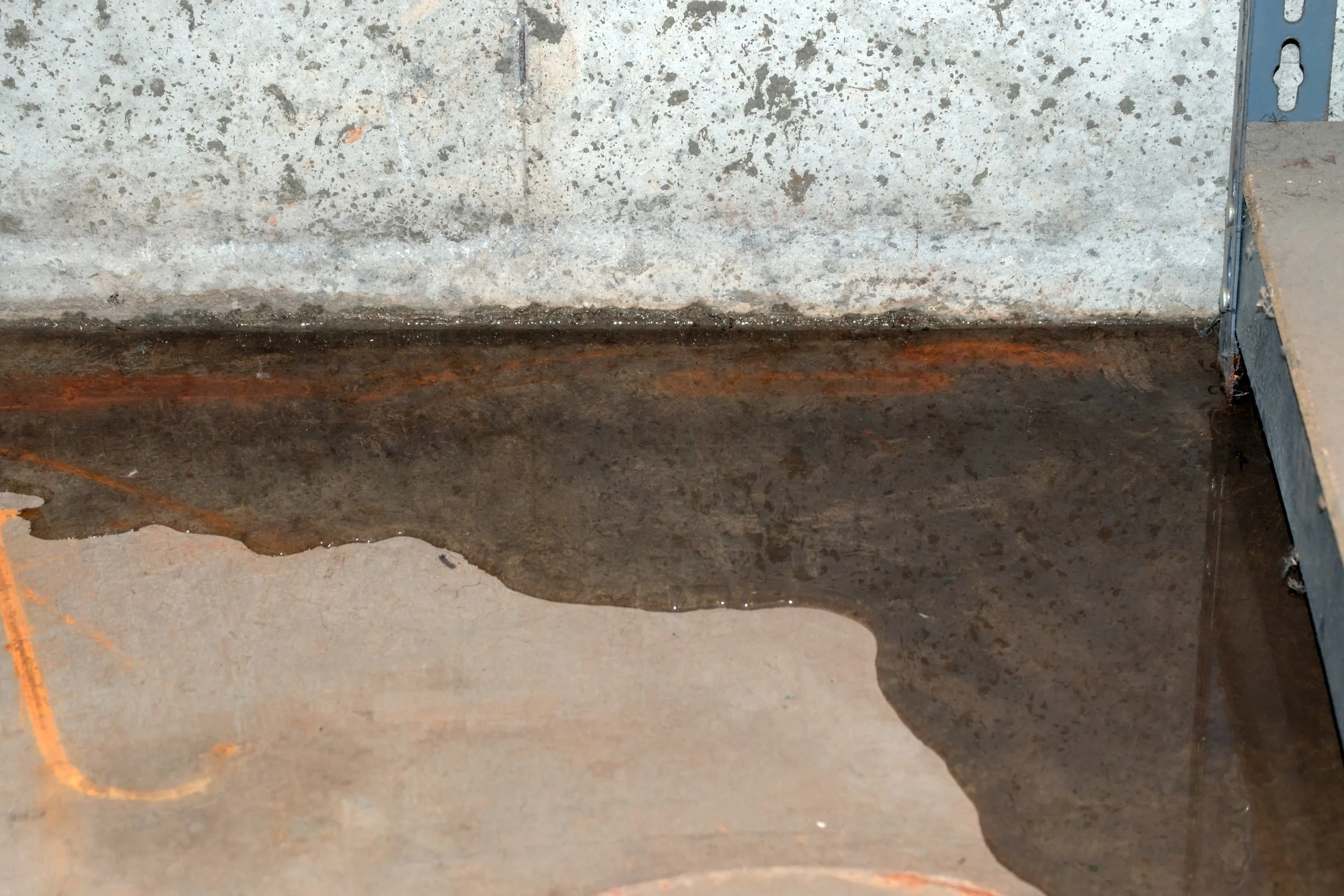
Nobody expects a Saturday morning to start with sewage in the basement shower. In Kennesaw's older neighborhoods, where cast iron pipes from the 70s and 80s still run under mature oak and pine, it happens more often than you would think. The good news: you almost certainly do not have to tear up your yard to fix it. Trenchless pipe relining installs a brand-new pipe inside your existing line with a single small access point. Here are seven signs it is time to look into it for your home.
What trenchless pipe relining actually is
Trenchless relining, formally known as cured-in-place pipe or CIPP, is exactly what it sounds like. A plumber pulls a felt or fiberglass liner saturated in epoxy resin through your existing sewer pipe, inflates it against the inner walls, and lets it cure in place. What you end up with is a new pipe inside your old pipe, seamless from end to end, strong enough to stand on its own even if the host pipe fails.
The North American Association of Sewer Service Companies (NASSCO) sets the industry standard for CIPP performance and specifies that liners be designed for a service life of 50 years or more (see NASSCO CIPP Specification Guideline). Paramount Plumbing is NuFlow Certified and uses a cured-in-place system engineered to that standard.
The entire process can usually be done through a single small access point, sometimes a cleanout in the basement or yard, which means no backhoe, no ripped-up lawn, and no destroyed driveway. Now the seven warning signs.
You have snaked the same drain twice in 12 months
One clog is a bad day. Two clogs in the same line, in the same year, is a failing pipe. Repeat backups almost always signal structural damage: a belly in the pipe where water sits, a cracked joint where roots intrude, or scale buildup that reforms faster than it can be cleared.
If you are paying a plumber to snake the main line more than once a year, you are spending money to rent time, not fix the problem.
Gurgling toilets or drains
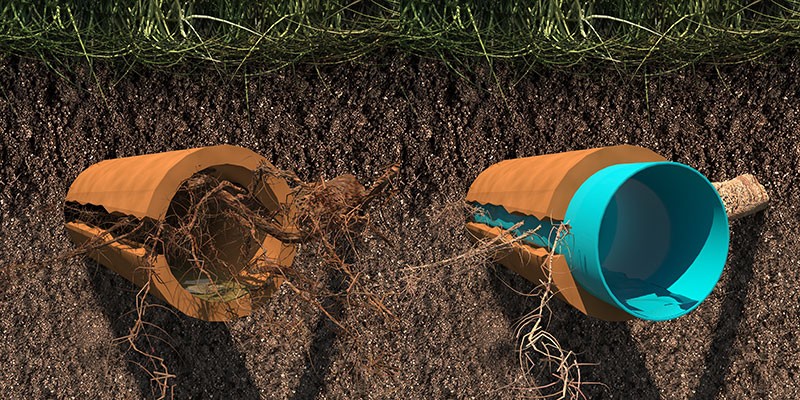
When you flush the toilet and the tub drain bubbles, or the sink gurgles every time the washer empties, you have a partial blockage somewhere downstream. Air is trying to escape past an obstruction. That obstruction is often tree roots that have pushed through a joint, exactly the kind of damage trenchless relining is built to fix in place.Sewer smell in the yard or basement
A healthy sewer system is sealed. You should never smell it. When cracks or offset joints develop, sewer gas, which includes hydrogen sulfide, leaks out and finds its way into your yard, your basement, or worst case, your living space.
If you notice a persistent sewer smell that disappears briefly after a heavy rain, you are almost certainly looking at a damaged lateral line. Get a camera inspection before it becomes a health issue.Lush patches or sunken spots in the yard
This one is subtle in Kennesaw's red clay soil. A slow leak from a cracked sewer line acts like a fertilizer feed, so the grass directly above the pipe grows thicker and greener than the rest of the lawn. If the damage is further along, the soil washes or compacts into the void, leaving a shallow depression.
Walk your yard after a dry spell. A stripe of unusually green grass heading toward the street is not a blessing. It is a diagnosis.
Slow drains throughout the house
One slow drain is probably a local clog. Two or more slow drains, especially on different levels of the house, almost always point to a main line issue. If every sink drains half-speed and every flush hesitates, the problem is not in any one fixture. It is in the pipe that serves all of them.Your home has a cast iron, clay, or Orangeburg sewer pipe
If your house was built before 1980 in Kennesaw or anywhere in Cobb County, there is a very good chance your sewer lateral is cast iron. Cast iron has a useful life of 50 to 75 years in favorable conditions (InterNACHI), and a lot of Southeast homes are now at or past that mark. Corrosion from inside, combined with root pressure from outside, eventually cracks the pipe.
Orangeburg pipe, made of tar-impregnated wood fiber, was widely used from 1945 to 1972. It was marketed as a 50-year pipe. Most of it does not last that long. Orangeburg deforms, flattens, and collapses, and it does it on its own schedule, with or without root intrusion. If you have Orangeburg, trenchless relining is often the only cost-effective way to restore the line without a full excavation.
Clay pipe, common in some older neighborhoods, is durable but brittle. Joints crack, roots find the gaps, and the line fails in sections.Pests showing up where they did not before
Rats, roaches, and sewer flies do not appear by magic. They travel. A damaged sewer line is a highway for rodents from the municipal system directly into the crawl space, the basement, or the wall cavity.
If pest control has not solved the problem, stop paying them and call a plumber with a sewer camera. You are treating the symptom, not the cause.
What a camera inspection actually shows
A sewer camera inspection takes 30 to 60 minutes and does not require any digging. A technician feeds a waterproof camera down your lateral line and records video of the entire pipe from cleanout to municipal main.
In Kennesaw homes, the most common findings are:
• Root intrusion at joints (the top cause of lateral failure nationally).
• Bellies, which are low spots that collect water and waste.
• Cracks, breaks, and offset joints.
• Scale and sediment buildup, especially in cast iron.
• Partial or full collapses.
The camera footage also tells you whether trenchless relining is a viable option. If the pipe is intact enough to host a liner, you are a candidate.
Trenchless relining vs. dig-and-replace
Traditional sewer replacement in 2025 and 2026 typically runs $3,000 to $6,000 for the pipe work alone, plus an additional $3,000 to $8,000 in restoration costs for landscaping, driveway patching, and concrete work (Angi 2026 cost data).
CIPP trenchless relining typically runs $4,000 to $15,000 depending on length, priced per linear foot between $70 and $150. There are almost no restoration costs because nothing gets dug up. The sticker shock on a trenchless quote can look higher, but the all-in number is often lower, and you keep your lawn, your driveway, and your mature landscaping.
How the Paramount process works
Free camera inspection. We confirm relining is the right fit and identify any sections that may need a different approach.
Hydro-jet cleaning. We scour out roots, scale, and buildup so the liner bonds cleanly.
Liner installation. A resin-saturated liner is inserted through a cleanout or a single small access point.
Curing. Depending on the system, the liner cures with ambient air, hot water, or UV light.
Final camera inspection. You see the before and after footage.
Warranty. Our CIPP work carries a transferable warranty, which can be a selling point if you put the house on the market later.
Typical project timeline, start to finish, is one day on site for most residential laterals.
When trenchless is not the right call
We will tell you the truth when it is not. Full collapses where the host pipe no longer exists cannot be relined. There is nothing to line against. Severely back-pitched lines with deep bellies often need a short dig to re-grade before lining. Pipe-bursting or spot repair is a better fit in a few specific cases. An honest camera inspection is the only way to know for certain.
Frequently Asked Questions
How long does trenchless pipe relining last?
CIPP liners are designed for a service life of 50 years or more, per NASSCO industry standards. Well-installed liners from the 1980s and 1990s are still in service today.
Is trenchless relining cheaper than replacement?
Once you include landscape, driveway, and concrete restoration, trenchless relining is usually comparable to or less than traditional excavation for typical residential lines.
Will I need a permit in Cobb County?
Yes. Sewer lateral work requires a plumbing permit. A licensed plumber handles the permit as part of the project.
Can you reline under a driveway or slab?
In most cases, yes. That is one of the main reasons homeowners choose trenchless. The access point is outside the hard surface and the liner runs through.
How long does the whole process take?
Most residential projects are completed in a single day on site, from arrival to final camera inspection.
Stop the next backup before it happens
If your sewer line is giving you warning signs, find out for sure before it floods the basement. Paramount Plumbing offers camera inspections across Kennesaw and metro Atlanta and is NuFlow Certified for trenchless relining. No backhoe. No destroyed landscaping. One visit. Call (404) 400-4444 or schedule your inspection online