Trenchless Pipe Repair in Kennesaw: What It Is, When It Makes Sense, and What It Costs
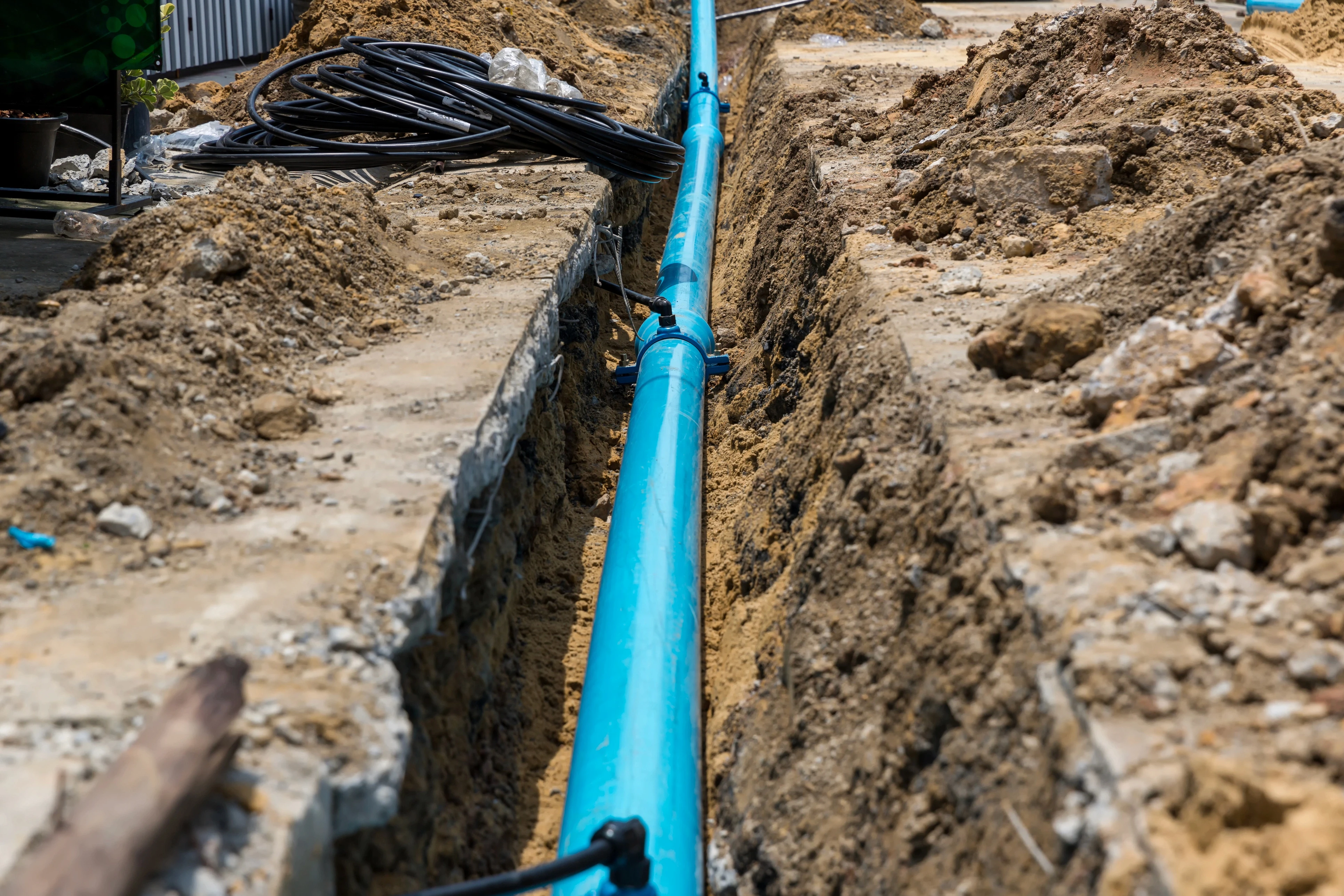
Ten years ago, a failed sewer line in your front yard meant a backhoe tearing up your landscaping, driveway, or sidewalk to expose the damaged pipe. Today, there is a category of repair methods that replaces or rehabilitates those pipes from the inside, with access points at each end rather than an open trench along the full length. Trenchless pipe repair has become the preferred solution for sewer line failures in established Kennesaw neighborhoods precisely because it spares the disruption that made traditional sewer repairs so costly and invasive. This guide explains how trenchless methods work, when they apply, and how to evaluate whether the approach makes sense for your property.
Why sewer lines fail in Kennesaw
Understanding the failure mode matters because it determines which repair method is appropriate.
Root intrusion
Tree roots are the leading cause of sewer line failures in established neighborhoods. Roots follow moisture, and a sewer line is a reliable moisture source. They enter through joints, cracks, and any small opening, then grow to fill the pipe interior. Once roots are established inside a sewer line, they do not stop growing. Left untreated, they cause complete blockages and eventually crack the pipe from the inside out. In Kennesaw and surrounding Cobb County neighborhoods with mature oak, sweet gum, and pine trees, root intrusion is an extremely common finding on camera inspections.
Pipe joint separation
Older clay and cast iron sewer lines have multiple sections joined together. Soil movement — from seasonal dry-wet cycles, freeze events, or settling — can shift those joints out of alignment. The gap allows root entry and allows sewer gas and effluent to leak into the surrounding soil.
Pipe corrosion
Cast iron sewer lines corrode from both the inside and outside over time. Interior corrosion from sulfuric acid generated by hydrogen sulfide in sewage pits the pipe wall and eventually creates perforations. Exterior corrosion from soil chemistry follows a similar path.
Bellied pipe
A belly is a sag or low point in the sewer line where soil has settled unevenly beneath the pipe. Water and waste accumulate in the belly rather than flowing to the sewer. Bellies cause recurring backups and eventually create a section of standing water that accelerates deterioration.
What trenchless repair actually means
Trenchless is a category, not a single method. The two primary approaches are pipe lining and pipe bursting. They are not interchangeable — each applies to different conditions.
Pipe lining (cured-in-place pipe, or CIPP)
Pipe lining inserts a flexible liner — saturated with epoxy resin — into the existing pipe through a small access point. The liner is inflated to press against the interior of the host pipe, then the resin is cured using heat or UV light. The result is a structural pipe within a pipe: the deteriorated host pipe remains in place as a sleeve, and the new liner becomes the functional pipe, sealed at every point along its length.
Pipe lining works well when:
The existing pipe is structurally intact enough to serve as a mold. Severely collapsed sections cannot be lined.
Root intrusion has damaged the pipe wall without fully collapsing it.
Joint gaps and cracks are causing infiltration but the pipe geometry is otherwise sound.
The pipe has corrosion damage but the diameter is still adequate after lining.
Pipe lining reduces the interior diameter of the pipe slightly — typically by a quarter to three-eighths of an inch depending on wall thickness — which is generally not a flow concern for residential sewer lines.
Pipe bursting
Pipe bursting pulls an expander head through the existing pipe, fracturing it outward into the surrounding soil, while simultaneously pulling a new polyethylene pipe into position behind it. The old pipe is destroyed and displaced; the new pipe takes its place at the same depth and alignment.
Pipe bursting works well when:
The existing pipe is clay, cast iron, or another brittle material that fractures cleanly.
The pipe is too deteriorated to line — collapsed sections, severe bellying.
A larger-diameter replacement is desired.
Root intrusion has caused repeated failures that point toward full replacement rather than rehabilitation.
Pipe bursting requires an access pit at each end of the section being replaced — typically small excavations rather than a full trench, but more invasive than lining.
When trenchless is not the right answer
Trenchless methods are not universal. A camera inspection determines which approach, if any, applies to your situation.
Severely bellied pipe cannot be lined effectively because the liner follows the interior contour of the existing pipe. The belly remains.
Completely collapsed pipe sections may prevent liner or bursting head insertion.
Pipes running beneath structures, grade beams, or footings require evaluation for whether bursting will affect the foundation.
Very short sections of damage — a single cracked joint — may be addressable with a spot repair rather than full lining.
A reputable contractor runs a camera inspection before recommending any repair method. If a company quotes a trenchless repair without first inspecting the line with a camera, treat that as a warning sign.
What the process looks like
Camera inspection first
Before any repair begins, Paramount Plumbing cameras the line from cleanout to the connection point. The camera produces a video record of the interior condition, logs defect locations, and confirms the pipe diameter and material. This is the foundation of a defensible repair recommendation.
Hydro-jetting before lining
Before a liner goes in, the pipe needs to be cleaned thoroughly. Root masses, grease, and scale are removed with hydro-jetting so the liner bonds to the pipe wall rather than to debris.
The repair
For pipe lining, the liner is pulled or inverted into position, inflated, cured, and trimmed at the access points. Final cure times vary by method — UV-cured systems can complete the cure in under an hour; ambient-temperature heat cures take longer. The line is then re-inspected with the camera to confirm the liner is seated properly and there are no voids.
For pipe bursting, the access pits are excavated, the bursting head and new pipe are rigged, and the pull is completed in a single pass. The access pits are backfilled and compacted. Surface restoration depends on what was affected — grass, pavers, concrete.
Restoration
A trenchless repair typically requires restoring only the small access points rather than the full pipe run. The difference in landscaping and hardscape restoration cost between trenchless and traditional open-cut repair is often the largest single cost variable — and it is not always reflected in the plumber's quote. When comparing bids, ask explicitly what surface restoration is included.
What trenchless repair costs in Kennesaw
Trenchless repair is not inexpensive, but it is often less expensive than traditional open-cut repair once the full cost is calculated — including surface restoration, permit fees, and disruption to plantings, driveways, and sidewalks.
For residential pipe lining, cost is primarily driven by pipe diameter and linear footage. A typical residential sewer lateral in Kennesaw runs 50 to 100 feet from the house to the municipal connection. Costs vary by site conditions, access, and the specific method required.
Paramount Plumbing provides itemized estimates after camera inspection so you understand exactly what you are being quoted for: inspection, cleaning, repair method, access points, and restoration. We do not quote trenchless repairs without inspecting the line first.
How trenchless repair compares to repeated rooter service
A common pattern: a homeowner calls for a rooter every six to twelve months to clear a recurring root intrusion. The rooter clears the roots and the line flows, but the entry point remains, and the roots return. Over five years, the cumulative cost of repeated service calls can approach or exceed the cost of a permanent lining that seals the entry points entirely. If you have called for drain service in the same line more than twice in three years, a camera inspection and lining estimate is worth getting.
Frequently Asked Questions
How long does a pipe liner last?
Most manufacturers rate cured-in-place pipe liners at fifty years or more under normal operating conditions. The liner bonds to the host pipe and is not affected by the external conditions — soil chemistry, root pressure — that deteriorated the original pipe.
Will trenchless repair work on my clay tile sewer line?
Clay tile is one of the most common pipe materials in established Kennesaw neighborhoods, and it is a good candidate for both lining and bursting. Lining works well when the joints have gaps but the tile is intact. Bursting is well-suited to clay tile because it fractures cleanly.
Do I need a permit for sewer line repair in Cobb County?
Yes. Sewer line repairs and replacements require a permit in Cobb County. Paramount Plumbing handles the permit application as part of the project.
Can you repair only part of the line if only part of it is damaged?
Yes. If the camera finds a localized defect — a single cracked joint or a short section of root intrusion — a spot repair or short section liner is an option. Not every sewer problem requires lining the full run to the street.
How disruptive is the process for my landscaping?
For pipe lining, disruption is typically limited to the access points — usually at the cleanout near the house and at the far end. For pipe bursting, two small access pits are required. Neither involves trenching the full length of the line. Specific disruption depends on where the access points land relative to plantings, irrigation, and hardscape.
Ready to get a real look at your sewer line?
If you have had recurring backups, an unexplained increase in drain issues, or your home is more than twenty-five years old and has never had a sewer camera inspection, now is the time. Paramount Plumbing serves Kennesaw, Acworth, Marietta, and greater Cobb County with camera inspection, hydro-jetting, pipe lining, and pipe bursting. Call (404) 400-4444 to schedule an inspection and get a straightforward recommendation based on what the camera actually shows.