Backflow Prevention in Cobb County: What Every Homeowner and Business Owner Needs to Know
Backflow is not a hypothetical risk. It is the mechanism by which contaminated water — from irrigation systems, pools, fire suppression lines, or industrial equipment — enters the drinking water supply. It has caused documented illness outbreaks across the country, and it is precisely why Georgia and Cobb County require backflow preventers on certain connections and mandate annual testing to keep them certified. If you own a home with an irrigation system, operate a commercial building, or manage a multifamily property in Kennesaw or the surrounding area, this guide covers what you are required to do, what can go wrong when you do not, and what the testing process actually looks like.
How backflow happens
Your water supply system is pressurized. Under normal conditions, water flows in one direction: from the municipal supply into your property. Backflow occurs when that pressure relationship reverses — either because supply pressure drops (back-siphonage) or because a connected system generates higher pressure than the supply (back-pressure). Either condition can push water from a non-potable source back into the drinking water supply.
Common causes of pressure reversals include main breaks in the municipal system, high water demand during fire suppression, elevation differences, and equipment on commercial sites that generates pressure. The connection points where non-potable water can enter are called cross-connections, and the device that prevents backflow at those connections is the backflow preventer.
What requires a backflow preventer in Cobb County?
Cobb County Water System follows the Georgia Rules for Safe Drinking Water (391-3-5) and administers its own cross-connection control program. The general requirement is that any connection between a potable water supply and a system that could contaminate it must be protected with an appropriate backflow preventer.
In practice, that means:
Irrigation systems. Every residential or commercial irrigation system that connects to potable water supply requires a backflow preventer. This is one of the most common residential installations in Kennesaw neighborhoods with in-ground sprinkler systems.
Fire suppression systems. Fire lines connected to potable supply require a detector check assembly or reduced pressure zone device.
Commercial buildings. Almost every commercial connection requires a meter-level device, typically a reduced pressure zone (RPZ) assembly.
Multifamily properties. Apartment communities commonly have multiple devices: main potable supply, each irrigation zone, fire line, and pool fill.
Pool and spa fill connections. Any connection that fills a pool, hot tub, or decorative water feature from potable supply requires backflow protection.
Boilers and HVAC equipment. Where water treatment chemicals are used in the system, a higher-grade backflow preventer is required.
If you are not sure whether your property requires a device or what type, a certified backflow tester can assess your connections and tell you exactly where you stand.
Annual testing: what Georgia requires and why
Installing a backflow preventer is not a one-time compliance task. Georgia requires that backflow prevention assemblies be tested annually by a certified backflow tester and that results be submitted to the utility. In Cobb County, reporting is done through the Swift Comply portal.
The reason for annual testing is that backflow preventers contain mechanical components — check valves, seals, relief valves, and springs — that wear and lose effectiveness over time. A device that passed testing two years ago may not provide adequate protection today. Annual testing confirms the device is functioning within the specified pressure and differential thresholds.
What happens if a device fails testing? It must be repaired or replaced before it can be recertified. This is not optional — an uncertified device on record with the utility is a compliance violation, and the utility can require corrective action.
What the testing process looks like
Backflow testing is not an all-day ordeal. For most residential and small commercial devices, the process takes thirty to sixty minutes per assembly. The tester connects differential pressure gauges to the test cocks on the assembly, isolates each check valve, and records pressure readings that confirm the device is holding within specification.
The service call includes:
Testing each assembly on the property.
Providing a pass/fail determination on each device.
Submitting results to Swift Comply on your behalf.
Providing you with a copy of the test report for your records.
If a device fails, the tester will explain what failed, what the repair involves, and what it will cost. Most failing devices have worn seals or dirty check valves that can be repaired on the same visit.
Common reasons devices fail testing
Worn check valve seats. The rubber seats inside the check valves degrade over time and no longer hold differential pressure.
Debris in the valve. Sediment or scale from the supply line gets into the device and prevents proper seating.
Relief valve opening at too low a pressure. The relief valve on an RPZ assembly should only open under backflow conditions. If it is weeping or dripping into the relief port regularly, the differential is off.
Freezing damage. Devices installed in exposed locations that were not properly insulated or drained before a freeze may have cracked housings or damaged internals.
Age. Devices over fifteen to twenty years old often fail on wear alone. At that point, replacement is more cost-effective than repeated repairs.
What it costs to ignore it
Property owners sometimes ask whether the annual testing requirement is strictly enforced. The practical risks of non-compliance go beyond regulatory enforcement:
Liability. If backflow from your property contaminates a neighbor's or tenant's water supply and causes illness, the absence of a functioning, certified backflow preventer on your cross-connection is a significant liability exposure.
Insurance. Commercial property and general liability policies may not cover claims arising from cross-connection contamination if the required backflow device was not in place and certified.
Utility service. Cobb County Water System can require disconnection from service for properties that fail to maintain compliant backflow prevention. For a commercial or multifamily property, that is not a theoretical risk.
Backflow preventers and irrigation systems: what Kennesaw homeowners get wrong
The most common residential backflow issue Paramount Plumbing encounters is irrigation systems installed without a proper backflow preventer, or with a pressure vacuum breaker (PVB) that was never tested or has been damaged.
A PVB is the most common residential irrigation backflow device. It must be installed at least twelve inches above the highest sprinkler head and must be accessible for testing. Many older installations have the device at grade level, which is a code violation in addition to a functional problem in a freeze event.
If your irrigation system was installed more than five years ago and you have never had the backflow preventer tested, there is a reasonable chance it has never been certified with the county and may not be functioning correctly. A single service call addresses both issues.
Frequently Asked Questions
How do I know if I have a backflow preventer on my irrigation system?
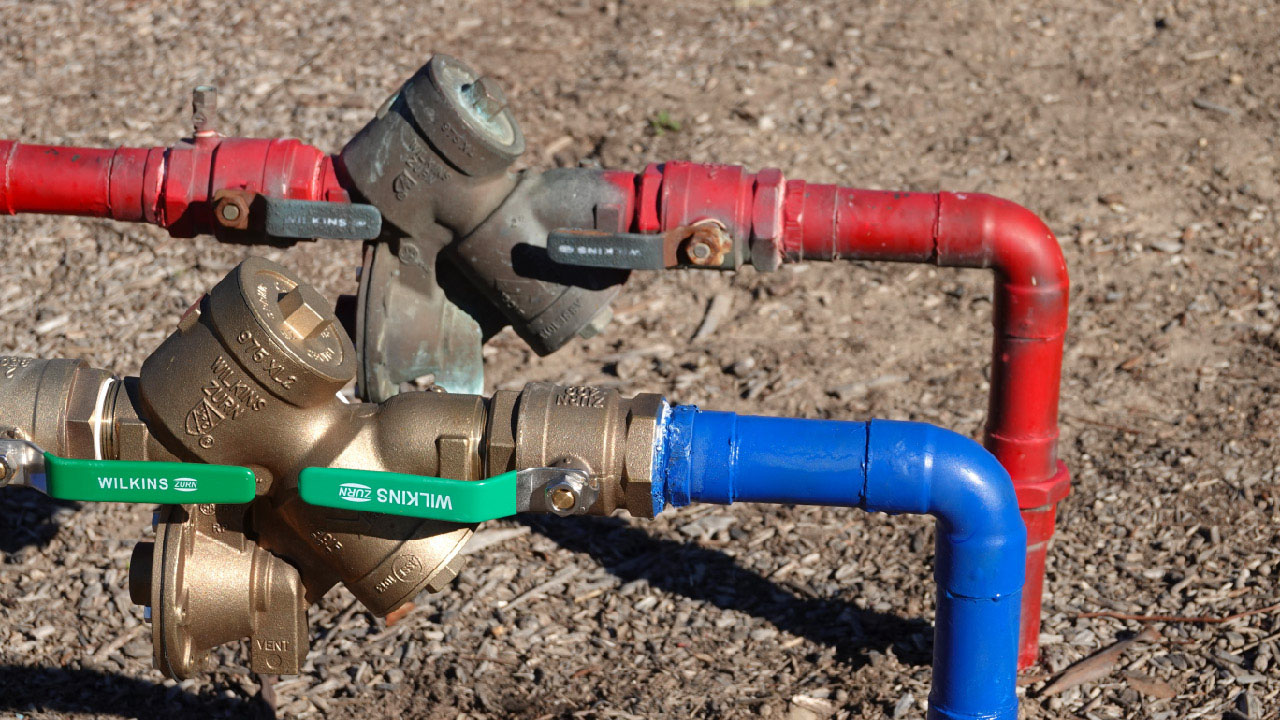
Look for a device — usually a brass or bronze assembly — near where the irrigation supply line branches off from the main water line, often in a box in the ground near the water meter or attached to an exterior wall. If you cannot locate one, there may not be one installed, or it may be in an unexpected location. A certified tester can find it.
Who is allowed to test backflow preventers in Cobb County?
Testing must be performed by a Georgia-certified backflow tester. Not all plumbers hold this certification. Paramount Plumbing's team includes certified testers who submit results to Swift Comply on your behalf.
Can a backflow preventer be repaired instead of replaced?
In most cases, yes. Worn seats, dirty check valves, and failed o-rings can be replaced. Complete replacement is necessary when the housing is cracked, corroded, or when the device is obsolete and parts are no longer available.
How much does annual backflow testing cost?
Cost varies by the number and type of assemblies on the property. For a single residential irrigation device, testing is typically straightforward. Commercial properties with multiple assemblies are priced per assembly. Contact Paramount Plumbing for a quote based on your specific property.
What happens if my backflow preventer fails and I cannot afford immediate repair?
The utility should be notified, and the non-potable connection (typically the irrigation system) should be isolated until the device is repaired. Operating a non-potable connection without a functioning backflow preventer is a violation and a genuine public health risk.
Get your backflow testing scheduled before the deadline
Cobb County's annual backflow testing cycle catches many properties unprepared. Paramount Plumbing handles backflow testing and certification, repair, and new installation for residential properties, commercial buildings, and apartment communities across Kennesaw, Acworth, Marietta, and Cobb County. We submit directly to Swift Comply and provide your test reports same day. Call (404) 400-4444 to schedule testing or to get a quote on a new installation.