Georgia Backflow Testing Requirements: A 2026 Compliance Guide for Commercial Property Owners
If you own or manage commercial property in Cobb County, Georgia, you are legally required to have your backflow prevention assemblies tested annually by a certified tester. Miss the deadline and you can face fines, a service shutoff, or worse, contamination liability. The rules have not changed for 2026, but enforcement has tightened. This guide walks through exactly what Georgia requires, which properties are on the hook, what testing costs, and how to stay ahead of the next notice.
What backflow is, and why Georgia regulates it
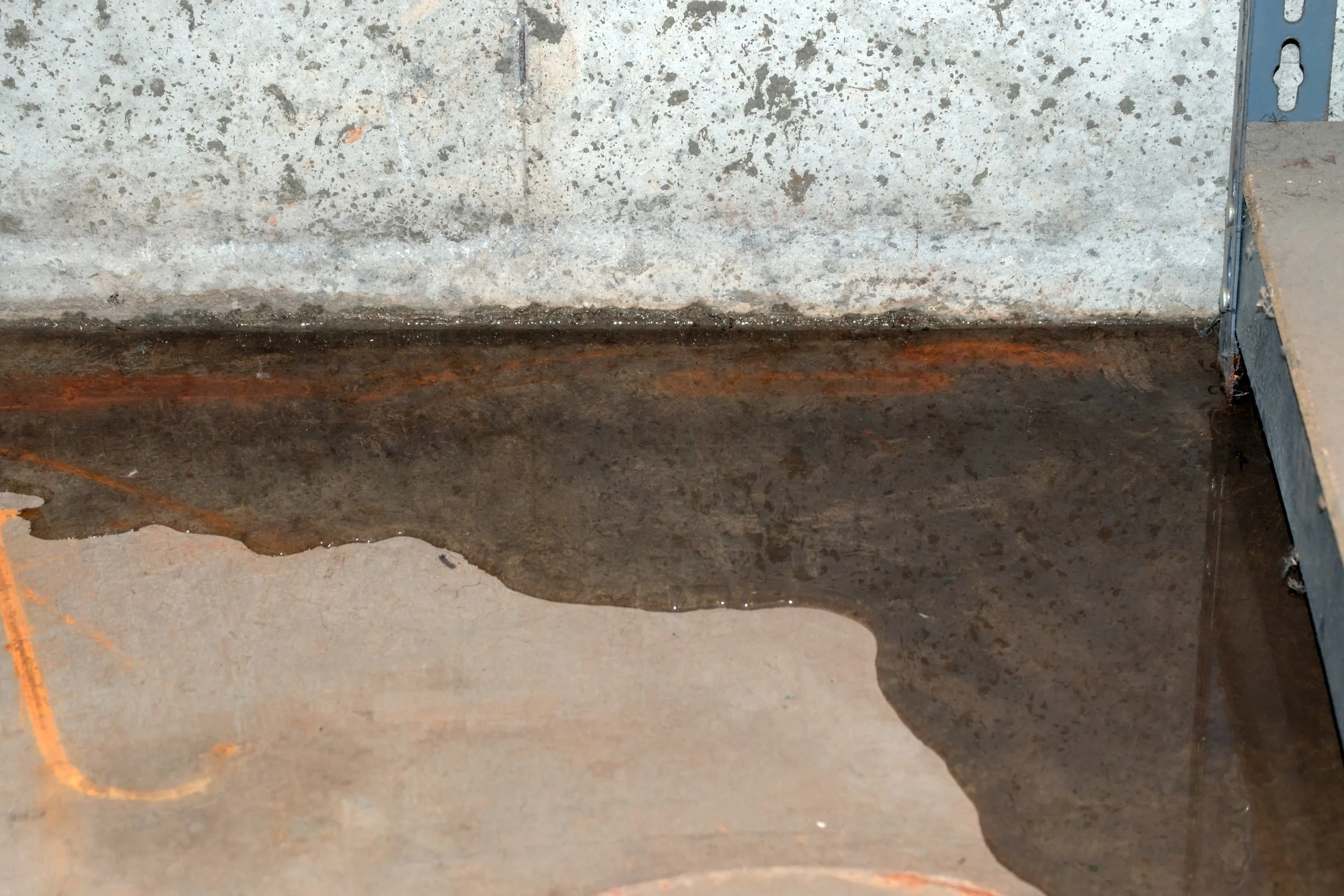
Backflow is the reverse flow of water from a non-potable source back into the public drinking water system. It happens in two ways: back-pressure (when downstream pressure exceeds supply pressure, such as a boiler pushing contaminated water back into the line) and back-siphonage (when supply pressure drops, such as during a water main break or heavy firefighting use, and the lower pressure pulls contaminants in).
The risk is not theoretical. Backflow events have contaminated public supply with everything from lawn chemicals and boiler additives to industrial solvents and medical equipment fluids.
The Georgia Environmental Protection Division regulates this under Chapter 391-3-5, Rules for Safe Drinking Water (see Chapter 391-3-5). Under these rules, no person may operate a physical arrangement where a public water system is or may be connected to a non-potable source. Water suppliers are required to have a cross-connection control program, and property owners are required to install and maintain approved backflow prevention assemblies at every cross-connection.
Local utilities, including Cobb County Water System, administer the compliance program inside their service area.
Which properties need backflow testing in Georgia
The short answer is: almost any commercial or multifamily property, and many residential properties with irrigation.
Always required in Cobb County and most Georgia utilities:
• Commercial properties with irrigation systems.
• Restaurants and food service, especially with soda, coffee, and dishwashing equipment.
• Medical, dental, and veterinary offices.
• Car washes, laundromats, salons, and pet-grooming facilities.
• Multifamily buildings with boilers, fire sprinkler systems, or rooftop irrigation.
• Industrial properties and warehouses with wash bays.
• HOAs and condominium associations with shared amenities.
Often required:
• Residential properties with in-ground irrigation systems.
• Single-family homes with certain auxiliary water sources, such as a well, pool auto-fill, or second meter.
If you are not sure whether a given property needs a backflow device, your utility's cross-connection control program will tell you based on the hazard class
Cobb County requirements in plain language
Cobb County Water System operates a formal Backflow Prevention Program that covers all of its retail customers (Cobb County Backflow Prevention Resources).
Key requirements:
• Every installed backflow prevention assembly must be tested annually by a tester licensed and registered with Cobb County.
• Testing must also happen after any installation, repair, or replacement of an assembly.
• All test reports must be submitted through Cobb County's Swift Comply portal.
• Commercial and industrial properties generally require RPZ (reduced pressure zone) assemblies for high-risk cross-connections, and double-check valves for fire lines.
• Compliance questions can be directed to the Cobb County Backflow Supervisor at 770-528-3343.
The cities of Kennesaw, Marietta, Acworth, Smyrna, and others inside Cobb County generally align with Cobb CCCP requirements. If a property is served by a different utility such as Marietta Water, check with that utility for its specific test-submission process.
Types of backflow assemblies, and where they belong
Not all assemblies are created equal. The hazard class of your cross-connection determines which type you need.
Reduced Pressure Zone (RPZ) assemblies are the highest-protection class. They are required on high-hazard connections: commercial irrigation with fertigation, medical buildings, laboratories, industrial processes, commercial boilers, and any connection where contamination would pose a serious health risk. RPZs are the most common assembly on commercial Cobb County properties.
Double Check Valve Assemblies (DCVAs) protect low-hazard connections. They are most often used on fire sprinkler lines without chemical additives and on certain light-commercial irrigation.
Pressure Vacuum Breakers (PVBs) are typically used for residential and light-commercial irrigation systems in non-hazardous conditions.
Atmospheric Vacuum Breakers (AVBs) are the simplest and cheapest. They protect against back-siphonage only, and have strict installation requirements (no valve downstream, specific height above the highest outlet).
The wrong assembly for the job is worse than no assembly, because it creates a false sense of compliance.
What the annual test actually involves
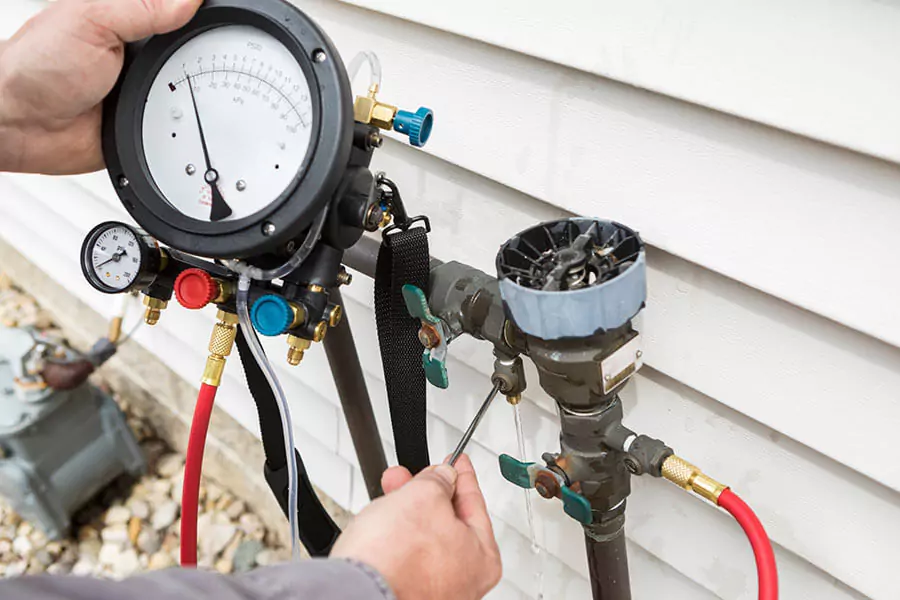
A certified tester shows up with a calibrated gauge kit and a test report form. The full process takes 20 to 45 minutes per assembly.
The tester notifies occupants that water will be off briefly.
They isolate the assembly, connect the gauge kit, and test each check valve and relief valve under pressure.
Results (pass or fail) are recorded.
If the assembly passes, the report is submitted to Cobb County through Swift Comply within the required window.
If it fails, repair or replacement is required within 30 to 60 days depending on the utility and the hazard class. A failed assembly on a high-hazard connection usually has a much shorter window.
Most properties can have multiple assemblies tested during a single appointment.
What backflow testing costs in 2026
For a single assembly in metro Atlanta, you should expect roughly $75 to $175 for an annual test, including the Swift Comply submission. Multi-assembly properties usually see per-assembly discounts on bulk testing.
Common repair costs:
• Replacement of a check valve or relief valve on an existing assembly: $150 to $600.
• Full RPZ replacement: $1,000 to $3,500 installed, depending on size.
• DCVA replacement: $400 to $1,500.
• PVB replacement: $250 to $650.The cost of not complying is higher. Cobb County can issue fines, escalate to water service shutoff, and in a contamination event, refer to state and federal authorities. Beyond penalties, your commercial liability exposure if you are found to have contributed to a contamination incident is significant, especially if insurance sees a skipped annual test on the record
The real consequences of non-compliance
Most non-compliance cases start with a missed annual test. From there, the escalation is predictable:
• Courtesy notice from the utility.
• Follow-up notice with a compliance deadline.
• Fee or fine.
• Disconnection notice.
• Service shutoff.
If a contamination event is traced back to an untested assembly on your property, you can be cited under both state rules and the federal Safe Drinking Water Act, exposed in civil actions from affected parties, and left with an insurance claim your carrier is motivated to deny. A single missed test is not the end of the world. A pattern of them is.
How to build a simple, durable compliance calendar
Most property owners fall behind because nobody owns the calendar. Here is a basic system that holds up:
• Inventory every assembly on the property. Record location, type (RPZ, DCVA, PVB, AVB), serial number, installation date, and the date of its most recent passing test.
• Set an annual reminder 30 days before the test anniversary for every assembly.
• Use a single testing vendor for consistency and accurate scheduling.
• Store every passing certificate in a central folder. Cloud storage with simple filenames (property-assembly-year.pdf) works fine.
• Budget for one repair or replacement event every 3 to 5 years per assembly as a baseline.
• Review the inventory whenever you add or remove irrigation, boilers, fire systems, or any cross-connection.
If you own multiple properties, a single service agreement with one tester covering everything simplifies this dramatically.
How to choose a certified backflow tester in Georgia
Not every plumber is a certified tester. Here is what to look for:
• State of Georgia backflow tester certification (typically issued after completing an approved course and exam).
• Registration with your local utility. In Cobb County, that means active registration in Swift Comply.
• Licensed and insured plumbing contractor. A plumber who is also a certified tester can test and repair in a single visit, which saves time and money.
• Transparent pricing, per-assembly rates, and no trip charges for multi-assembly properties.
• Digital test reports you can access when your insurer or utility asks for them.
• Familiarity with Cobb County submission requirements.
Paramount Plumbing is a licensed, insured plumbing contractor that handles backflow testing, repair, and replacement throughout Cobb County and metro Atlanta, and can take on single properties or multi-site portfolios.
Frequently Asked Questions
How often is backflow testing required in Georgia?
Backflow prevention assemblies must be tested at least annually by a certified tester, and also after any installation, repair, or replacement. Cobb County Water System requires test reports to be submitted through its Swift Comply portal.
Who is responsible for backflow testing, the owner or the tenant?
Legal responsibility almost always rests with the property owner, though commercial leases often pass the operational duty to the tenant. Review the lease and confirm who is on the hook. The utility will still bill the account holder.
What happens if I fail a backflow test?
You typically have 30 to 60 days to repair or replace the assembly and re-test, depending on the hazard class and the utility. High-hazard failures can require faster action.
Do I need backflow testing on a residential irrigation system?
In most Cobb County service areas, yes. Any in-ground irrigation system tied to the public supply requires an approved assembly and annual testing.
Can the same plumber test and repair my backflow assembly?
Yes, if the plumber holds both a Georgia backflow tester certification and an active plumbing license. Using one vendor for both saves a return trip and keeps the paperwork clean.
Get compliant for 2026
Missing a backflow test deadline is not worth the fine, let alone the exposure. Paramount Plumbing tests, repairs, and installs backflow assemblies across Kennesaw and metro Atlanta, submits your reports through Swift Comply, and keeps your property on a proactive reminder schedule. Call (404) 400-4444 or request service online to schedule testing.