Low Water Pressure in Your Kennesaw Home: What's Causing It and How to Fix It
Low water pressure is one of those problems that gets blamed on the city water supply when it usually has nothing to do with it. If your shower feels like it's running out of steam, your kitchen faucet takes forever to fill a pot, or your washing machine takes twice as long to finish a cycle, the cause is almost always inside your home's plumbing — not at the meter. Paramount Plumbing works through this diagnosis regularly for homeowners in Kennesaw, Acworth, and Smyrna, and the fix depends entirely on what is actually causing the restriction.
What normal water pressure looks like
For residential homes, water pressure between 40 and 80 PSI (pounds per square inch) is considered normal. Below 40 PSI, you start noticing it. Below 30 PSI, it becomes a daily inconvenience. If you have a pressure gauge at your outdoor hose bib, you can check this yourself. Hardware stores sell them for a few dollars. If your reading is consistently below 40, you have a real pressure problem — not a perception issue.
What causes low water pressure in Kennesaw homes
Mineral buildup inside the pipes
North Georgia water has moderate mineral content. Over time, calcium and magnesium deposits accumulate on the inside walls of your pipes, narrowing the passage water can flow through. This process — called scaling — is gradual, which is why homeowners often do not notice pressure declining until it is already significantly reduced. Older homes with galvanized steel pipes are especially prone to this. Once scaling reaches a certain point, the pipe needs to be replaced, not cleaned.
A failing pressure regulator
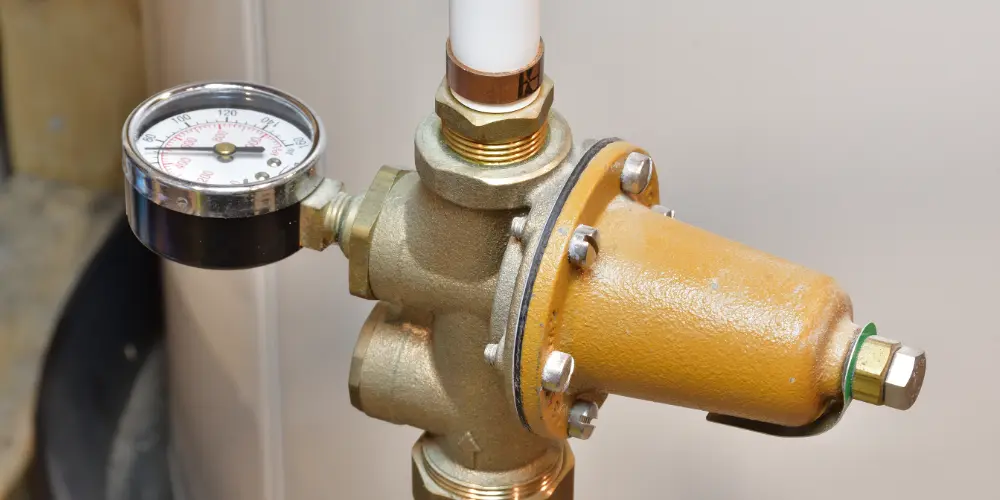
Most homes built in the last 40 years have a pressure-reducing valve (PRV) installed where the main water line enters the house. This device controls incoming municipal pressure and keeps it at a usable level inside the home. When the PRV begins to fail — and they typically last 10 to 15 years — it can cause pressure to drop across every fixture in the house simultaneously. This is one of the most commonly overlooked causes of whole-home low pressure. Replacing a PRV is a straightforward job for a licensed plumber and restores normal pressure almost immediately.
Partially closed shut-off valves
After any plumbing repair, a shut-off valve may be left partially closed. If the repair was to a fixture, you may see reduced pressure only at that location. If it was to the main line, the entire house is affected. Check both the main shut-off at the meter and any intermediate valves near the water heater or in utility areas.
Corroded or undersized supply lines
Older homes in the Kennesaw area were sometimes plumbed with galvanized steel pipes that are now significantly corroded from the inside. The internal diameter that once delivered full flow may now be so restricted that no amount of municipal pressure will compensate. Repiping with copper or PEX is the long-term solution.
A hidden leak somewhere in the system
Leaks do not always show up as wet walls or visible water. A slow leak in a wall, under the slab, or in a supply line running through the attic can reduce overall system pressure without any visible sign. If your pressure has dropped recently and you cannot identify a cause, a plumber can perform a pressure test to detect leaks before they become structural damage.
Water heater issues
Low pressure limited to hot water lines often points to the water heater — specifically, to buildup inside the tank or a partially closed inlet valve. Flushing the tank annually reduces sediment accumulation. If the pressure differential between hot and cold is significant, the heater is worth inspecting.
What you can check on your own
Measure your water pressure with a gauge at the hose bib.
Confirm all accessible shut-off valves are fully open.
Check the aerator screen on the affected faucet — these small screens trap mineral debris and clog over time. Unscrewing the aerator and rinsing it takes two minutes and sometimes solves the problem entirely.
See whether the low pressure is isolated to one fixture or affects the whole house.
If the problem is whole-home, or if removing the aerator does not make a difference, the cause is in the supply plumbing rather than the fixture.
When to call a plumber
Call Paramount Plumbing when:
Pressure is low throughout the house, not just one fixture.
You suspect a failing PRV.
You have noticed a recent unexplained increase in your water bill, which can indicate a leak that is also reducing pressure.
Your home has galvanized steel supply pipes.
You have already checked the obvious causes and cannot identify the issue.
Diagnosing pressure problems accurately saves money. A homeowner who replaces a faucet trying to solve a PRV problem wastes the repair cost. A plumber can identify the source with a pressure test and targeted inspection.
Frequently Asked Questions
Can I adjust my own water pressure regulator?
PRVs have an adjustment screw, and you can raise or lower the setting with a wrench. However, if the valve itself is worn, adjustment does not fix the underlying problem — it just temporarily compensates for it. If your pressure returns to normal after adjustment but drops again within weeks, the PRV needs to be replaced, not readjusted.
Is low water pressure a health or safety concern?
Not directly from pressure alone. However, very low pressure in irrigation systems can create backflow conditions that allow contaminated water to siphon back into the supply line. If you have an irrigation system and low pressure, a backflow inspection is worth adding to the service call.
How much does it cost to replace a pressure-reducing valve in Kennesaw?
PRV replacement typically runs between $250 and $500 in the Kennesaw area, depending on the valve location and pipe configuration. Paramount Plumbing provides upfront estimates before any work begins.
Will a water softener fix my low pressure from mineral buildup?
A water softener prevents new buildup from forming but does not remove existing scale from your pipes. If your galvanized pipes are already significantly scaled, a softener will slow further deterioration but will not restore lost pressure. At that stage, repiping is the practical solution.
How long does a pressure test take?
A standard pressure test takes 30 to 45 minutes. If a leak is detected, a camera inspection or additional diagnostic steps may extend the service call.
Pressure problems rarely fix themselves
Low water pressure is a symptom. The underlying cause a failing PRV, scaled pipes, a slow leak, or a stuck valve — will not improve on its own. Paramount Plumbing offers pressure diagnostics, PRV replacement, and repiping services for homes and businesses throughout Kennesaw, Acworth, Marietta, and greater Cobb County. Call (404) 400-4444 to schedule a diagnostic or request a same-day estimate.